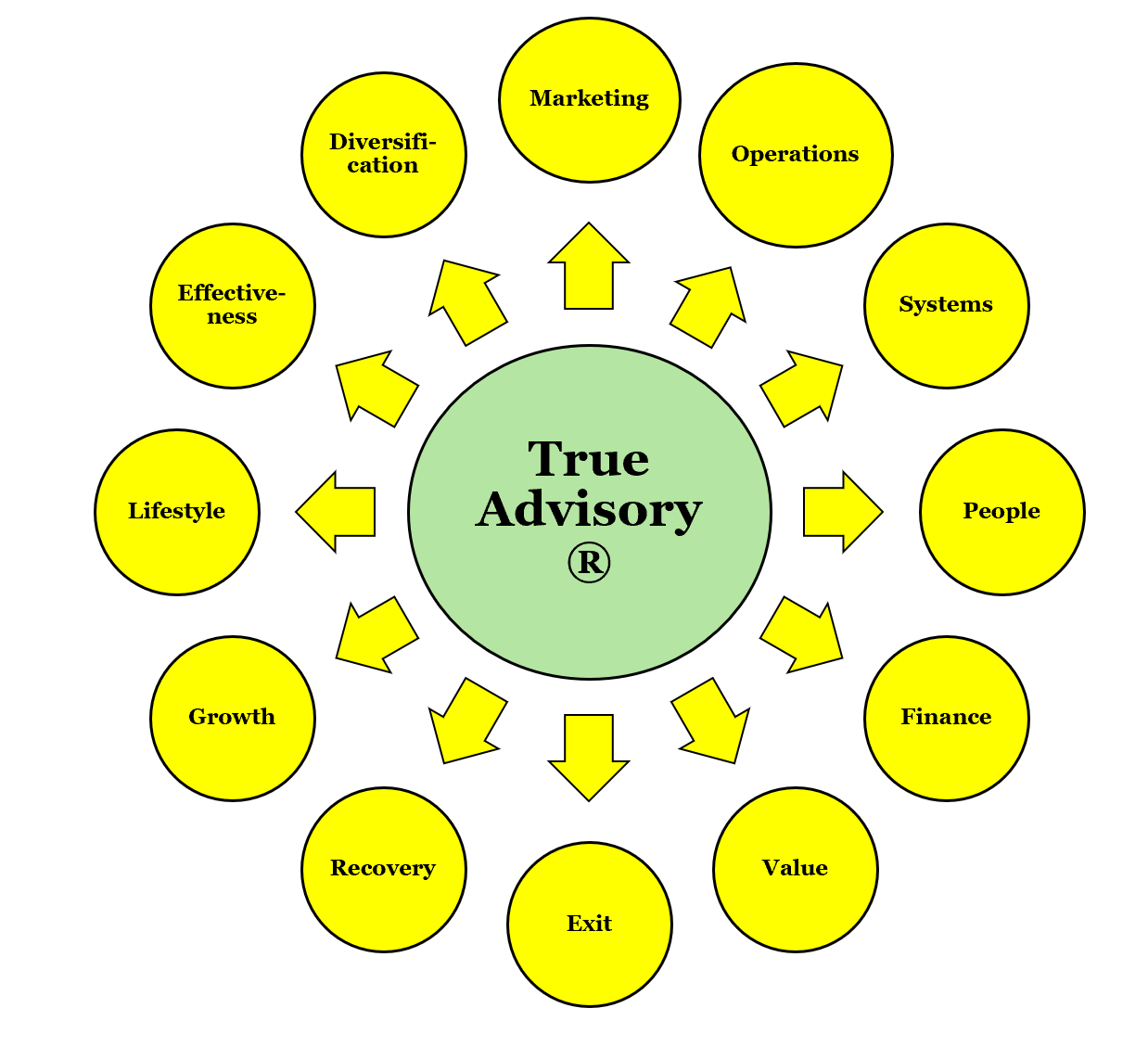
How Does True Advisory® enable Diversification?
A frequent question I receive is whether there are diversifications for accountants that are easier than advisory.
So, I say:
“The rules are simple…
1. Offer new products to your existing clients
Or…
2. Offer your existing products to new clients
But…
3. Never offer new products to new clients”
My favourite horror story is about the accountant whose client faced insolvency, and he decided to buy the restaurant from the liquidator for £1.
The two were friends after years of reciprocal business, so they were confident it would work with the restaurateur’s culinary skills paired with the accountant’s financial skills. What could possibly go wrong?
They made a business plan which included the accountant making a substantial working capital loan to the restaurant and promoting it to all his clients.
The restaurateur would promote the accountant to his customers by adding contact details to the menus, marketing emails and social media posts.
The accountant installed state of the art transaction systems, and his partner launched a takeaway service and a new fusion menu which were marketed strongly. He put up bright signs on the new premises with the cute new name and redecorated and refurnished the interior.
As expected, cash went down fast, but when it failed to plateau, the accountant was unable to find out why because his partner hadn’t completed any of the promised daily trading records which was a strict condition of the new partnership.
With only bank statements and erratic till records to go on, he stepped in and compiled his own daily manual records and started speaking to customers. He soon learned that the marketing was wrongly targeted, the menu was too elaborate, the takeaway campaign wasn’t working, and migrant staff were unable able to cook or serve to the boss’s ambitious new standards.
So, he enforced cost cuts, reduced the menu, fired half the staff, stopped cash being pocketed from the till and started working in the restaurant himself, operating the systems and tracking the money.
The restaurateur was angry that the accountant hadn’t allowed enough time for the plan to work and the accountant was annoyed with himself for not having known better.
He realised that he could never run a restaurant and that his partner would never understand finance. He looked back sadly on years of battles to get enough data for accounts and tax returns.
Meanwhile, his own accounting staff got fed up with his lack of availability to help solve client problems and looked for other jobs.
Both businesses failed in the end, the restaurant quickly and the practice slowly. And a friendship was ruined because neither had understood the other’s customers and products, nor acknowledged their mutual strengths and weaknesses.
So, what is the smart way for an accountant to diversify?
Understand your key clients very well
Get to know their problems and ambitions
Analyse and present their financial trends
Grasp their personal and business desires
Build your capability to meet all their needs
Introduce your new services gradually
Work together to deliver these for results
Market the expanded service array
Attract targeted new clients
It happens by osmosis, sharing insights, uncovering demand, introducing new services.
Bit by bit.
So, will moving into True Advisory® make all that happen?
Well…
Runagood®’s Yellow Brick Road journey identifies and develops all the possible products and markets from within the practice by turning it into a business.
So yes…
But it won’t suggest opening a restaurant!
Next step: It’s a big subject so feel free to explore all that and discuss what the new ‘Diversified You’ could look like. Call me anytime.